
Player props have quietly become the biggest story in NFL betting. More money now flows into questions like how many yards a receiver will gain or whether a running back finds the end zone than into some traditional sides and totals. Sportsbooks know it, which is why the prop menu on a Sunday slate has exploded into thousands of individual markets.
Here is what most bettors miss. That explosion is exactly why props are beatable. Books simply cannot price thousands of markets as sharply as they price a marquee point spread, and the gaps that creates are where profit lives. This guide walks you through how to bet NFL props in 2026, from the fundamentals to the exact workflow sharp bettors use every week.
Why NFL Player Props Are the Softest Market in Football
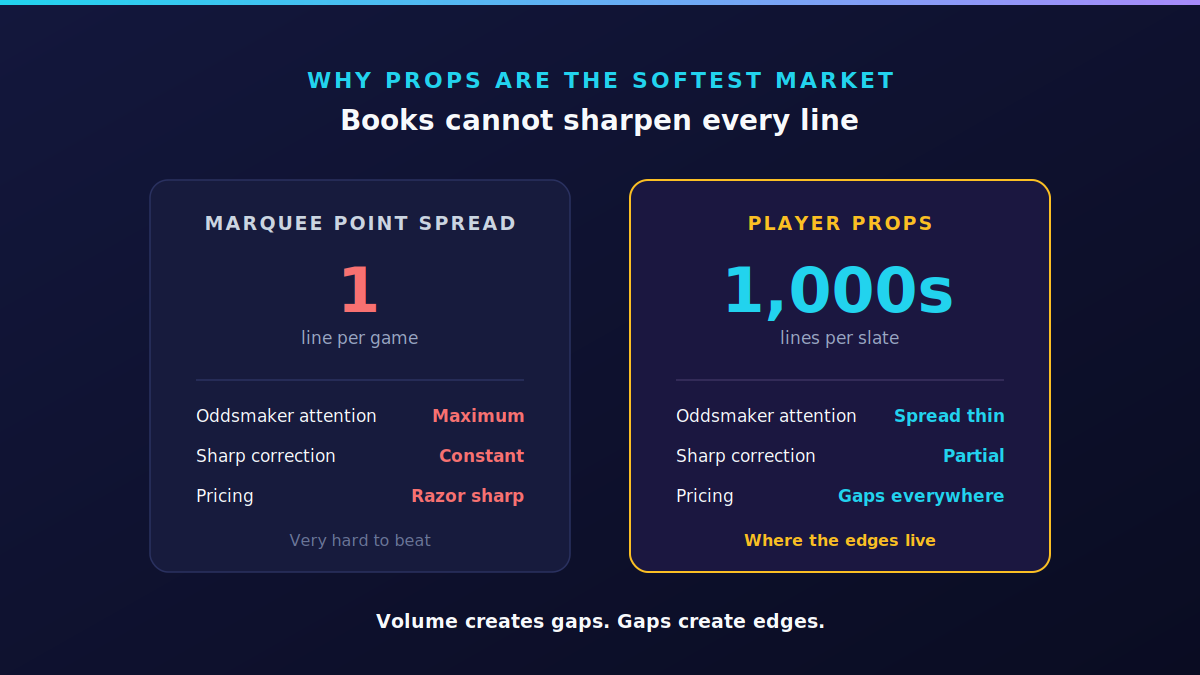
Think about how a sportsbook allocates its resources. The Sunday night point spread gets enormous attention, huge betting volume, and constant correction from professional money. By kickoff, that line is razor sharp.
Now consider a backup tight end's reception total in a Thursday game. It gets a fraction of the volume, a fraction of the oddsmaker attention, and far less corrective action from sharp bettors. The book sets a reasonable number and moves on. Multiply that across every skill position player, every stat category, and every game on the slate, and you have thousands of lines that were never scrutinized closely.
That is the opportunity. Props are not soft because books are careless. They are soft because pricing them all perfectly is mathematically impossible. Volume creates gaps, and gaps create edges.
The Prop Markets That Matter Most
Not all props are created equal, and knowing where to focus saves you enormous time.
Passing yards and passing touchdowns are the highest volume quarterback markets. They are reasonably efficient in marquee games but often lag in less watched matchups.
Rushing yards and rushing attempts hinge almost entirely on game script and workload. A back in a game his team is expected to lead is a completely different proposition from the same back in an expected shootout.
Receiving yards and receptions are where target share does the heavy lifting. A receiver's role in the offense matters far more than his name recognition, and this is a market where public perception routinely lags reality.
Anytime touchdown scorer is the most popular prop in football and, not coincidentally, one of the most heavily juiced. Approach it knowing you are paying a premium for the fun.
Alternate lines, meaning higher or lower thresholds than the standard number, deserve more attention than they get. Because fewer people bet them, they are frequently priced less carefully than the main line.
What Actually Moves an NFL Prop Line
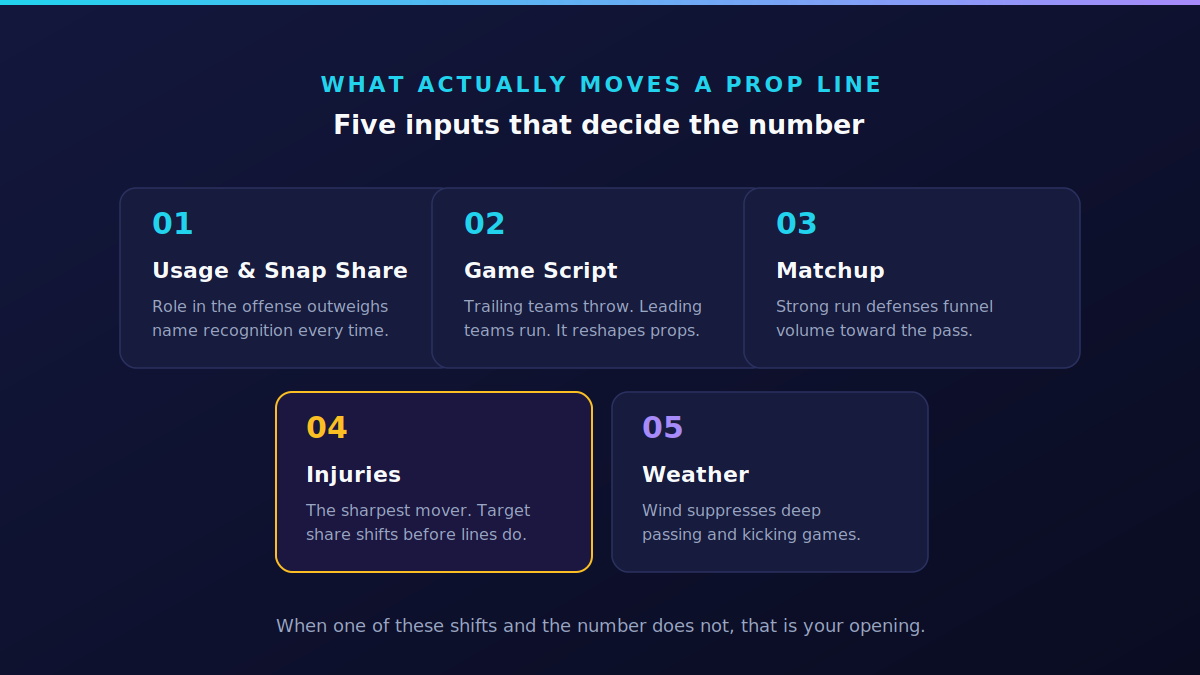
Understanding the inputs helps you recognize when a number is wrong.
Usage and snap share sit at the top of the list. A player who takes the field for 85 percent of his team's offensive snaps has a fundamentally different projection than one at 55 percent, regardless of talent.
Game script comes next. Teams that fall behind throw more and run less. Teams that lead do the opposite. A projected blowout reshapes every prop in that game.
Opponent matchup matters, though not always in the way public bettors assume. Defenses that are strong against the run funnel volume toward the pass, and defenses that shut down a team's primary receiver push targets toward everyone else.
Injuries and lineup changes create the sharpest movement of all. When a starting receiver is ruled out, every other pass catcher on that roster gains target share, and the market does not always adjust every affected prop at the same speed.
Weather still matters for outdoor games in December and January, particularly wind, which suppresses deep passing and kicking markets more than most bettors account for.
The 2026 Reality: You Need Tools, Not Just Takes
Here is the honest part. You could research all of the above manually for a single prop. Doing it across the thousands of props on an NFL Sunday is not a matter of effort or dedication. It is simply not possible by hand, and the bettors consistently beating props in 2026 are not trying to.
What they do instead is let software compare every available prop against the sharpest pricing in the market, then focus their attention only on the small number of lines where a genuine gap exists. That shift, from forming opinions on props to identifying mispriced props, is the single biggest difference between recreational and profitable prop betting.
The Workflow That Actually Wins
Here is the practical process, week to week.
Start With the Standard View to Find Value
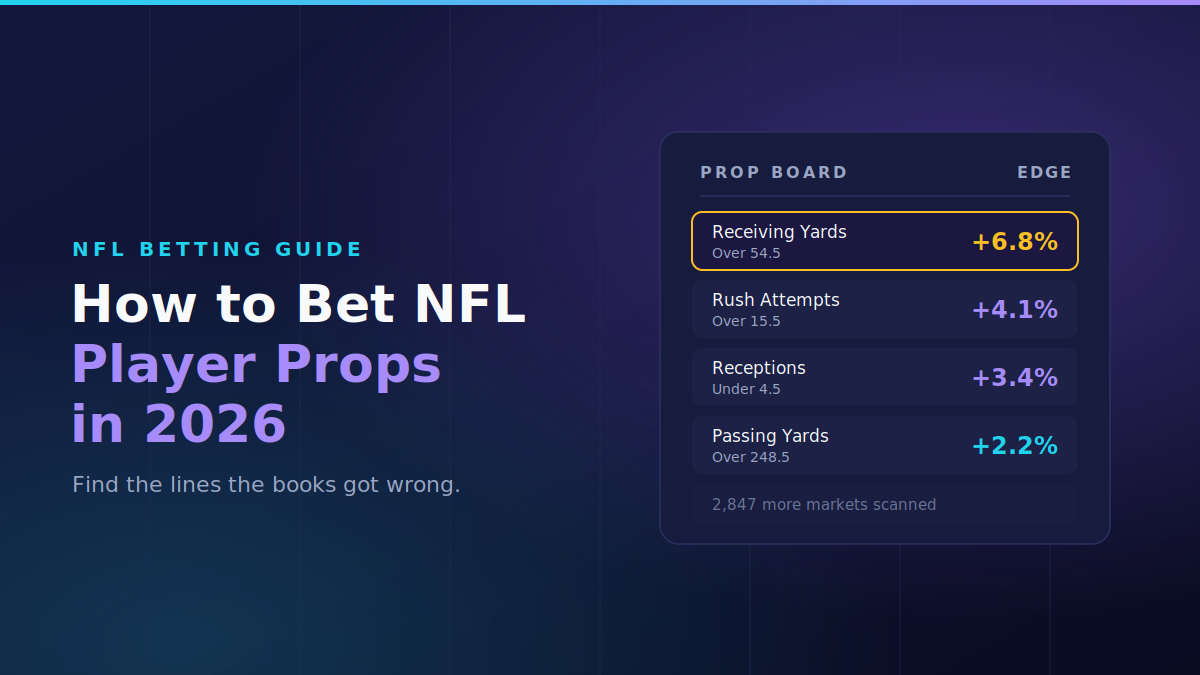
Open the player prop optimizer in standard view and let it do the scanning. Rather than browsing players you have opinions about, you are looking at the entire prop board ranked by measurable value. The tool compares each prop against the sharp market baseline and surfaces the lines that have drifted away from their true probability.
Fantasy Hit Rate Tracker
Every pick our optimizer flags, graded automatically
Hit rate
59.0%
Picks graded
4,049
Days tracked
202
- WNBA 62.7%
- NBA 61.6%
- NHL 60.0%
- NFL 58.7%
- MLB 58.0%
This inverts how most people bet props. You are not starting with a player and hunting for a reason to bet him. You are starting with the mispriced lines and working backward.
Cross Check Against Sharp Money
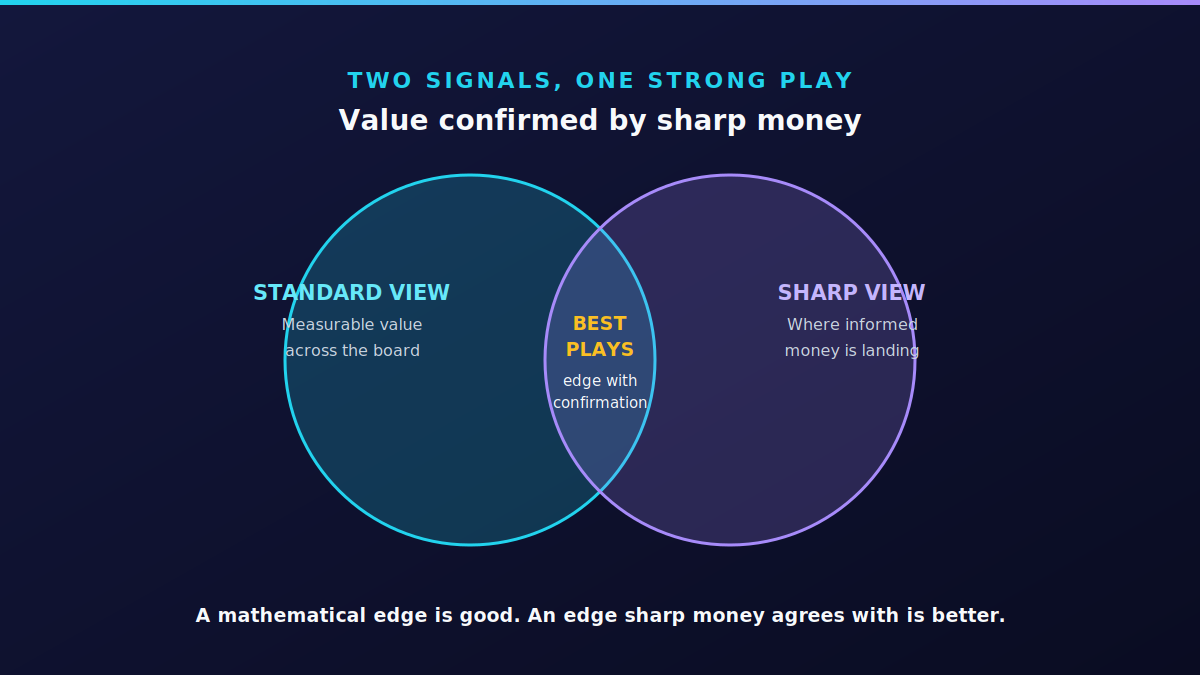
This is the step that separates good weeks from great ones. Switch to the sharp money view to see where informed money is actually landing.
Value and sharp action are two different signals, and they are strongest together. A prop showing positive expected value is a mathematical edge. A prop showing positive expected value that sharp money is also backing is a mathematical edge with confirmation from the people who move markets. When both align, you have found the strongest plays on the board.
The sharp view is also invaluable for spotting movement before it fully reflects in the number. When informed money hits a prop early in the week, the line often has not finished adjusting. Getting there first is where the best prices live.
Extend Beyond DFS Apps
If you bet at traditional sportsbooks rather than pick'em apps, the same principle applies across a much wider board. The +EV plays tool covers the full sportsbook market, surfacing positive expected value opportunities beyond DFS props. Running both gives you far more qualifying plays each week, which matters because prop profitability is driven by accumulating many small edges rather than swinging on a few big ones. Our guide to +EV betting explains why that volume matters so much.

Move Before the Market Does
Prop lines move fast, especially midweek when news breaks and again in the hours before kickoff. An edge you spot Thursday morning may be gone by Thursday night. Check early, act on what qualifies, and resist the urge to sit on a play hoping for a better number.
Common NFL Prop Mistakes
A few habits reliably drain bankrolls, and they are easy to avoid once you see them named.
Betting narratives instead of numbers is the most common. A player coming off a huge game feels like a strong bet, but the market has already priced that in, and usually overpriced it.
Overloading on touchdown scorers is the next. They are exciting and heavily juiced, which is a poor combination for long-term profit.
Ignoring backup and role player props leaves real money on the table. The least watched markets are the least accurately priced, which is precisely where edges concentrate.
Stacking too many correlated legs is a quiet killer. Three props from the same game feel connected, and they are, but that correlation multiplies your risk far more than most bettors realize.
Finally, sizing bets inconsistently undermines everything else. Even a strong edge produces poor results if your staking is erratic, which is why sound bankroll management belongs alongside your bet selection.
Setting Expectations for the Season
Prop betting rewards patience and volume. You will not feel your edge on any given Sunday, and you will absolutely have losing weeks where every number lands just short. That is variance, not failure.
What matters is the accumulation. Place enough genuinely positive expected value props across a full season and the math surfaces. Our breakdown of how many units you can realistically make shows what that looks like over a full year of disciplined betting.
The Bottom Line
NFL props in 2026 are the best combination of enormous market size and imperfect pricing that football betting offers. The books cannot sharpen thousands of lines every week, and every line they miss is an opportunity for someone paying closer attention.
The winning approach is not better takes. It is a better process: scan the full board for measurable value, confirm it against where sharp money is going, and place your bets before the market corrects. Open the player prop optimizer before your next slate and see which lines the books got wrong this week.
Please play responsibly. Sports betting carries real financial risk, and no tool or strategy guarantees a profit. If gambling is affecting your life, free and confidential support is available through the National Council on Problem Gambling. Must be of legal age in your jurisdiction.